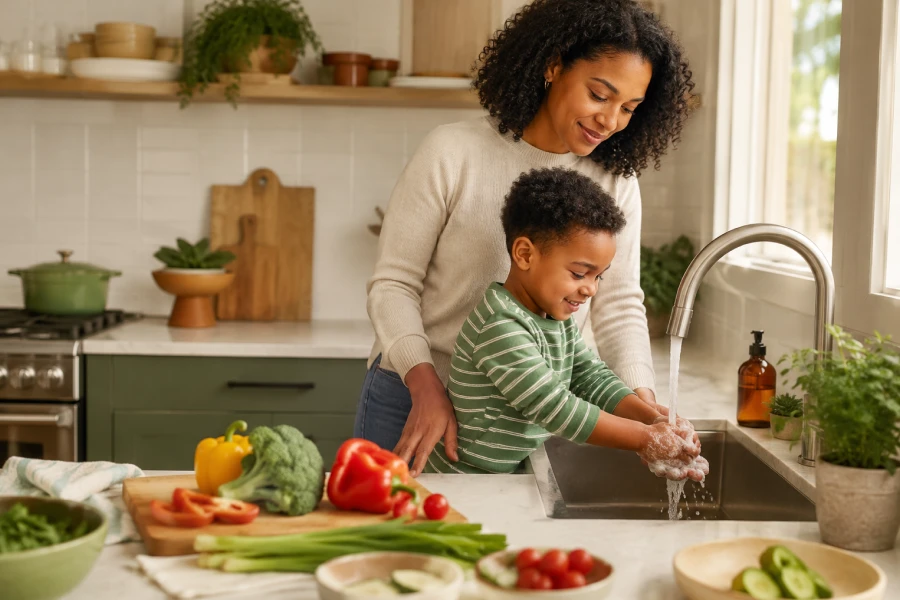
Kitchen safety for kids begins with preparation, not warnings shouted after something goes wrong. Children can learn the kitchen is exciting and structured at the same time. That message matters. Fear does not build skill. Clear systems do. Parents can create safe participation by setting boundaries before cooking starts. The child knows where to stand, what to touch, and when to ask. This makes the kitchen feel less unpredictable. It also helps adults stay calmer. A practical food safety habits approach makes learning safer and more repeatable.
Visible rules help children remember what adults expect. Keep rules short enough to repeat. Wash hands first. Ask before touching tools. Stay in your cooking spot. Walk instead of running. Keep hands away from heat. These phrases are easier than long explanations. Parents can post picture-based reminders for younger children. Older children can help create the rules. That participation increases ownership. A rule becomes stronger when children understand the reason behind it. Clear kitchen rules protect confidence because children know how to succeed.
Tools should match the child’s age, strength, and attention. Not every child is ready for the same item. Begin with spoons, bowls, measuring cups, silicone spatulas, and safe spreading tools. Demonstrate how each tool works. Teach children to place tools down when listening. Keep adult-only tools out of reach. Sharp knives, hot pans, and electrical appliances need firm boundaries. Parents should avoid multitasking during tool practice. Supervision is part of the lesson. A structured safe family meal prep routine keeps tools from becoming distractions.
Clean hands are one of the first kitchen skills children can master. Make handwashing part of the opening routine. Use soap, water, and enough time to scrub well. Dry hands with a clean towel. Then begin the cooking task. Teach children that counters, utensils, and boards also need cleaning. Spills should be wiped before they spread. Produce should be rinsed under running water when appropriate. Raw meat, poultry, seafood, and eggs need extra caution. Children can learn separation early. Simple cleaning habits make the whole kitchen feel more orderly.
Kitchen safety for kids becomes especially important near heat. Ovens, stovetops, boiling water, and hot pans require adult control. Children should learn a clear hot zone. Mark where they may stand during cooking. Turn pot handles inward. Keep cords away from edges. Use back burners when possible. Explain that steam can burn too. Let children observe heat from a safe distance. Older children can gradually help when maturity allows. A careful kitchen teamwork for families plan keeps everyone aware during busier moments.
Cross-contamination sounds complicated, but children can understand the idea. Some foods carry germs before cooking. Those foods should not touch ready-to-eat foods. Use separate boards or wash boards carefully between tasks. Keep raw meat juices away from vegetables, bread, and fruit. Wash hands after touching raw ingredients. Change utensils before serving cooked food. Children can help by noticing which bowl is for what. Use color, placement, or simple labels without making the scene busy. The lesson should feel practical. Clean separation becomes a habit when repeated calmly.
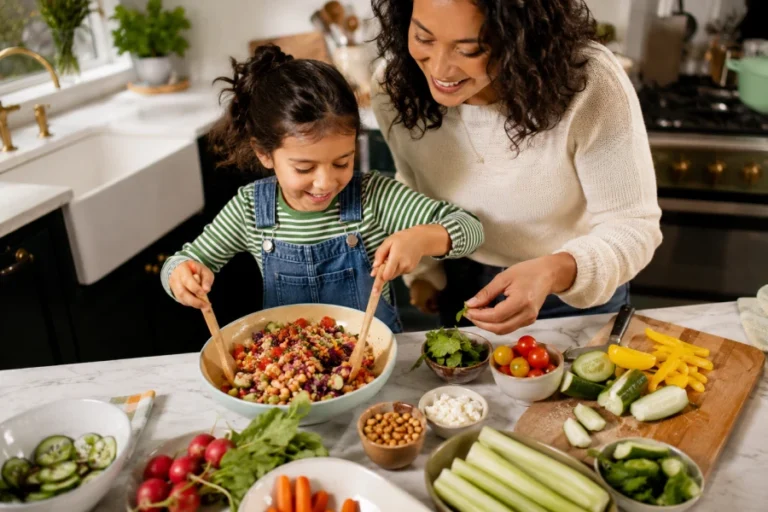
Kitchen safety for kids should lead toward independence, not constant fear. Children become more capable when adults teach one skill at a time. First they wash hands. Then they stir. Later they measure. Eventually they read steps and prepare simple foods. Each skill rests on safety habits learned earlier. Parents should celebrate careful choices. A child who asks before touching a tool shows maturity. A child who wipes a spill quickly shows awareness. These moments deserve attention. A useful practical kitchen learning system helps families turn safety into confidence.



Leave a comment