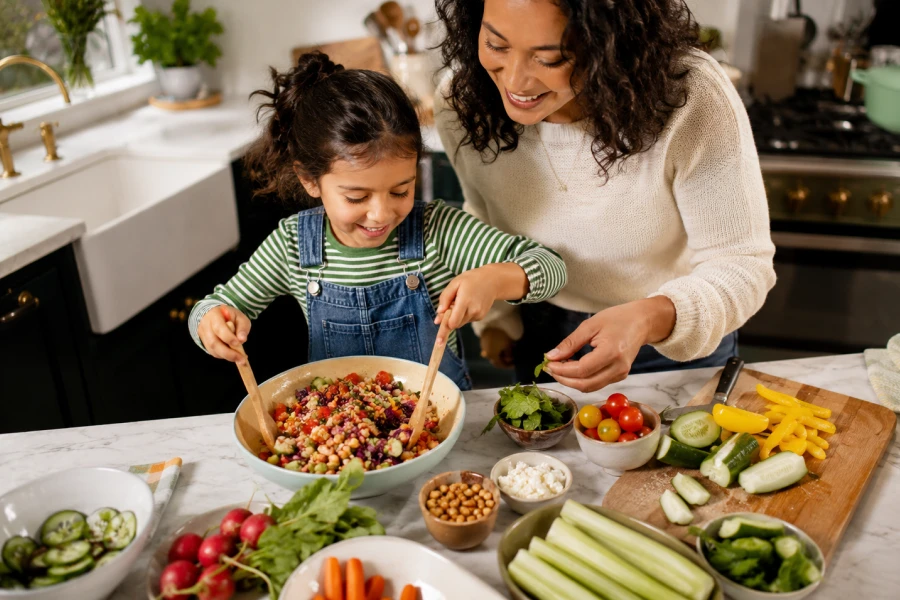
Kids cooking activities can turn an ordinary meal into a practical learning moment. Children often want to help before they can manage complicated tasks. That eagerness is useful when parents channel it safely. Cooking builds patience, coordination, language, and responsibility. It also helps children see food as something they can understand. The key is choosing tasks that match age and readiness. A child does not need sharp tools to participate meaningfully. They need structure, supervision, and a clear role. Dinner becomes less of a spectator event. A playful kids kitchen routine can make participation easier.
Children notice when their job matters. A pretend task may entertain them briefly. A real role builds pride. Let younger children rinse produce, tear lettuce, stir batter, or sprinkle toppings. Older children can measure, read steps, or assemble simple plates. The task should be safe but not meaningless. Parents should explain how the job helps the meal. That connection builds motivation. It also teaches respect for shared work. A child who contributes feels more invested. Real roles make kitchen time calmer because everyone knows why they are there.
Age matters, but readiness matters more. Some preschoolers follow directions carefully. Some older children still need close reminders. Start with tasks that avoid heat, sharp blades, and raw meat. Add responsibility slowly as skills improve. Demonstrate each step before handing it over. Keep instructions short. Watch hands, posture, and attention. Praise careful behavior, not just the finished food. A useful child cooking tasks plan helps parents match jobs to real ability. That makes success more likely for everyone.
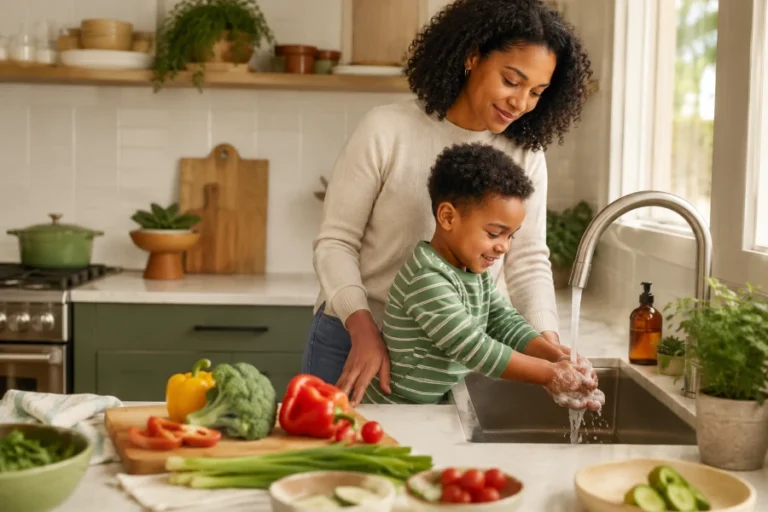
Safety should feel like part of cooking, not a lecture before cooking. Begin with handwashing. Tie back long hair. Clear clutter from the work area. Keep handles turned inward. Explain which tools are adult-only. Put raw meat, seafood, and eggs away from ready-to-eat foods. Use separate boards when needed. Wipe spills quickly. Teach children to pause before touching anything hot. These habits protect the meal and the child. They also make the kitchen feel more organized. A clean start helps kids focus on the food instead of chaos.
Kids cooking activities can help hesitant eaters explore food without pressure. A child who washes carrots may smell them first. A child who tears herbs may notice texture. These small exposures matter. Parents should avoid turning cooking into a demand to eat. Invite curiosity instead. Ask what the food feels like. Ask how it changes after mixing. Let children serve themselves a tiny portion. Keep the mood light. A hands-on hands-on food skills approach lets food familiarity grow naturally.
Cleanup teaches responsibility after the fun part ends. Children can carry safe items to the sink. They can wipe low surfaces with supervision. They can sort napkins, spoons, or placemats. Older children can load simple dishwasher items. Keep cleanup tasks short and specific. Avoid presenting cleanup as punishment. It is part of the cooking cycle. Food preparation creates mess, and families restore the space together. This lesson matters beyond the kitchen. Children learn that contribution includes finishing well. Parents also prevent the kitchen from becoming overwhelming afterward.
Kids cooking activities become memorable because they combine movement, conversation, and shared purpose. Children remember stirring pancake batter with a parent. They remember choosing toppings for a family pizza. They remember tasting something they helped build. These moments do not require perfect recipes. They require patience and realistic expectations. A little flour on the counter is often part of learning. Parents can keep sessions short to protect everyone’s mood. Success grows when children leave wanting to try again. A practical parent-child kitchen time resource can make those memories easier to repeat.


Leave a comment