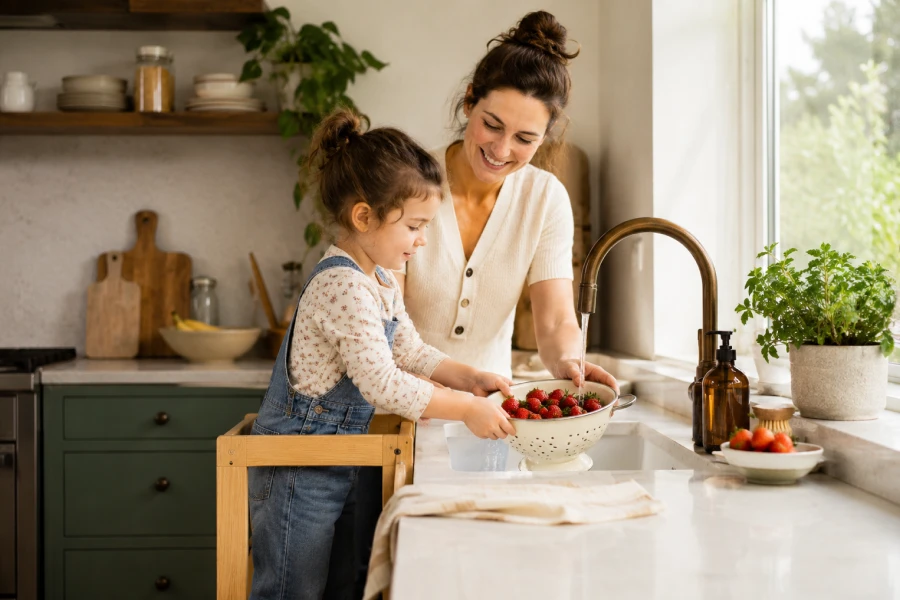
Child-friendly kitchen tasks help children participate without turning the kitchen into a risky place. Many parents want help to feel meaningful, not chaotic. That balance comes from choosing the right jobs. Children can build real skills through washing, sorting, mixing, measuring, and serving. They also learn patience, order, and attention. The kitchen becomes a classroom that smells like dinner. Parents do not need complicated recipes to begin. They need clear boundaries and tasks children can finish. Small wins build confidence quickly. A structured beginner cooking activities approach makes those wins more consistent.
Children feel safer when the rules are clear. Tell them which tools they may touch. Show them where to stand. Explain that hot pans and sharp knives require adult hands. Keep instructions short and repeat them calmly. Rules should not sound scary. They should sound like part of being a capable cook. Children can handle limits when adults stay consistent. A clear boundary also reduces parent anxiety. When everyone knows the safe zone, participation becomes easier. Good limits create more freedom, not less.
Skill level changes from child to child. One child may pour carefully. Another may need two hands and closer guidance. Begin with simple sensory tasks. Rinsing berries, tearing greens, spreading soft toppings, and stirring cool mixtures work well. Move toward measuring and assembling as control improves. Avoid rushing into tools because a child seems enthusiastic. Enthusiasm is not the same as readiness. Demonstrate first, then assist, then observe. A practical practical kitchen learning plan helps parents introduce skills gradually.
Prep work gives children ownership before cooking gets complicated. They can wash produce, remove stems, peel bananas, or count ingredients. They can place muffin liners in a tin. They can spread sauce with a spoon. They can press cookie cutters into soft dough. These tasks train hands and eyes together. They also show children that meals happen in steps. Parents should keep the workspace stable and uncluttered. A small bowl for each ingredient helps. Independence grows when the task feels manageable. Children return to the kitchen when success feels possible.
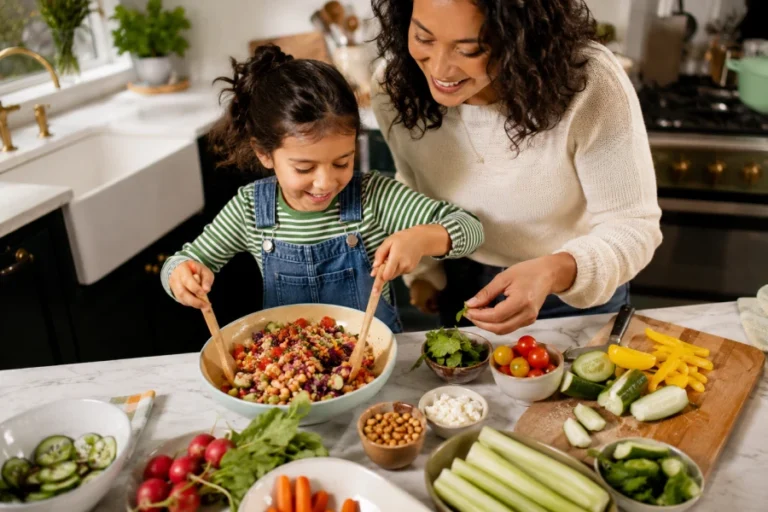
Child-friendly kitchen tasks can support everyday dinners, not only special baking days. Let children build salad bowls, arrange fruit, or add toppings to tacos. They can stir cooled rice with vegetables. They can set out plates or fold napkins. They can choose between two vegetable sides. These small roles make dinner feel shared. Parents should avoid giving children a job when the kitchen is already rushed. Start earlier, or choose one tiny task. A realistic safe family meal prep routine fits real weeknights better than big projects.
Food safety can be taught in calm, concrete language. Hands get washed because germs can travel. Raw foods stay separate because some foods need cooking first. Counters get wiped because spills can spread. Hot pans stay away because burns hurt quickly. Children understand reasons when adults explain them simply. Repeat the same safety phrases each session. Invite children to notice clean tools and separate boards. Praise them when they pause before touching. This builds awareness without fear. Safety becomes part of pride. A child who cooks carefully feels more grown-up, not restricted.
Child-friendly kitchen tasks should grow as confidence grows. A child who once rinsed produce can later measure ingredients. A child who sprinkled cheese can eventually assemble a simple lunch. Growth should feel earned, not forced. Parents can add one new responsibility at a time. Keep old familiar tasks available too. Familiar work helps children feel capable. New work keeps them engaged. Together, they create a healthy learning curve. A thoughtful cooking confidence for children resource can help parents plan that growth with less guesswork.



Leave a comment