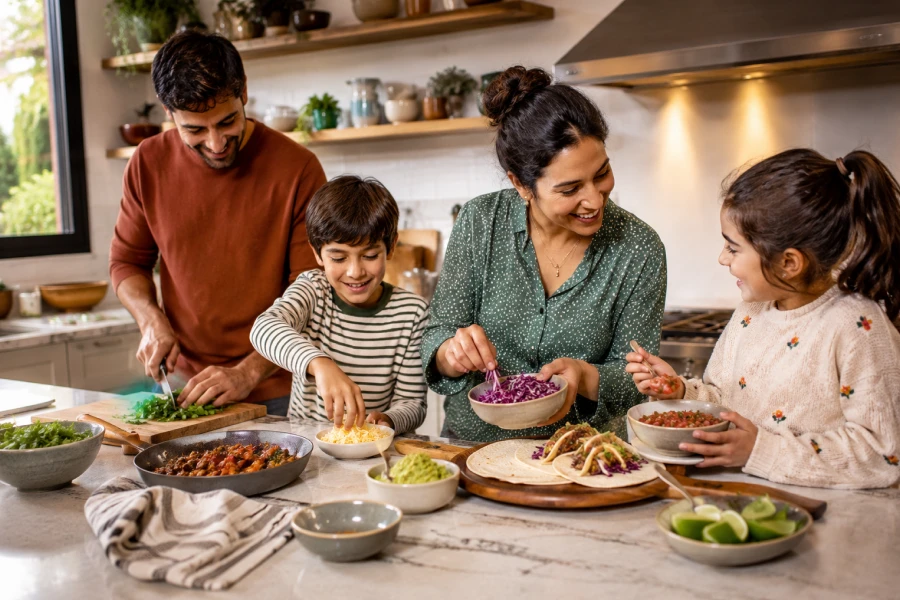
Family cooking with kids can feel joyful or completely overwhelming depending on the setup. Children bring curiosity, energy, questions, and occasional mess. Parents bring the recipe, safety rules, and the hope that dinner still happens. Roles make the difference. When each person has a clear job, the kitchen feels less chaotic. Children stop hovering because they know where to focus. Parents stop repeating every instruction from scratch. The meal becomes shared work instead of adult work with interruptions. A simple kitchen teamwork for families plan can make that shift easier.
A simple plan protects the mood of the kitchen. Choose the child’s task before cooking begins. Set out the supplies they can safely use. Remove tools they should not touch. Decide where the child will stand. Explain the job once, then show it. Keep the recipe realistic for the time available. Avoid trying a complicated new meal during a tired evening. Children do better when the adult feels prepared. A small plan can prevent many small frustrations. It also leaves more room for connection.
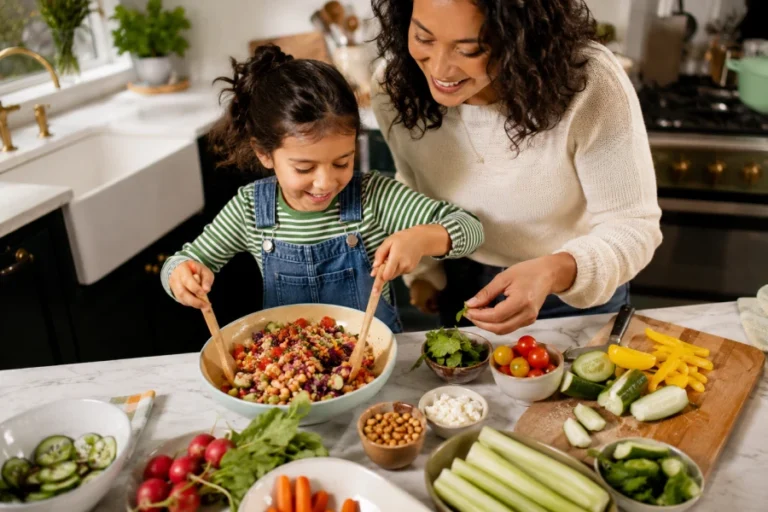
Cooking teaches cooperation because everyone depends on the next step. One person washes produce. Another measures ingredients. Someone sets the table. Someone stirs the cool mixture. Children see how tasks connect. They also learn that family meals take effort. This can reduce the idea that dinner simply appears. Parents should name the contribution out loud. That helps children connect their work to the result. A warm family cooking printables tool can help keep roles visible and easy.
Some recipes invite children naturally. Tacos, homemade pizza, smoothies, muffins, wraps, salads, and breakfast bowls all offer safe steps. Children can add toppings, stir ingredients, or build their own plate. These meals allow creativity without requiring risky techniques. Avoid recipes where every step needs speed or heat. Choose meals with pauses. Pauses give children time to participate. They also give parents time to guide. The best recipes have flexible outcomes. A slightly uneven pizza topping pattern still tastes fine. That kind of meal protects confidence and keeps the atmosphere light.
Family cooking with kids does not need to happen for the whole recipe. On busy nights, invite children into one small step. They can rinse grapes, sprinkle herbs, or place bread on plates. They can stir a cooled sauce or count forks. Short tasks still build belonging. Parents should not wait for a perfect Saturday. Weeknight micro-roles keep cooking familiar. They also prevent kitchen learning from feeling rare. A quick simple recipe participation habit makes involvement possible even during packed schedules.
Mess is part of kitchen learning, but it does not have to take over. Set boundaries before the task begins. Use a tray, bowl, or cutting board to contain ingredients. Give children smaller portions to handle. Keep towels nearby. Teach them to wipe spills immediately. Stay calm when flour scatters or sauce drips. Correct the process instead of criticizing the child. A calm response keeps learning safe emotionally. Cleanup should follow the task quickly. When children help restore the space, mess becomes part of responsibility.
Family cooking with kids builds skills slowly through ordinary repetition. Children learn vocabulary, counting, sequencing, and careful movement. They learn that food changes when mixed, heated, chilled, or seasoned. They also learn that family work can feel satisfying. These lessons become stronger when cooking happens regularly. Parents do not need to create a perfect teaching moment. They only need to invite participation in manageable ways. Over time, children become more capable and more curious. A thoughtful parent-child kitchen time routine helps those skills grow naturally.

Leave a comment